
Grapevine under attack: the microbes behind plant diseases
By: Elena Palencia Mulero
19/05/2026
The vineyard: a microbial ecosystem
A vineyard is much more than rows of grapevines, it is a complex, invisible world where countless microorganisms live together. They are everywhere: in the soil, on the leaves, and even floating in the air, forming what is known as the microbiome. 1
In a healthy vineyard, the microbial community is diverse and balanced, comprising both beneficial microorganisms and potential pathogens. Although pathogens can cause disease, they are usually kept under control within the microbial community.
Microorganisms support the plant in multiple ways, including promoting growth, improving nutrient uptake, and limiting the development of harmful microbes. Rather than acting independently, these microorganisms interact with each other, contributing to the overall stability of the system. 2
When the balance is lost
This balance, however, is not static, but constantly shaped by the interaction between the vine and its environment. Factors such as temperature, humidity, soil health, and farming practices all influence it. 3,4
Sometimes, this balance shifts. This state is known as dysbiosis. When this happens, the microbial community becomes disrupted: the helpful microbes decline, and others start to take over. This is often how disease begins. Microbes that were usually harmless can suddenly become a problem, or new ones can arrive and take advantage of weakened plant defenses (Figure 1).
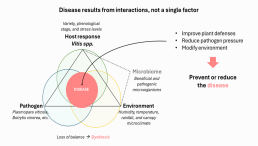
Figure 1. Disease emerges from vine-microbiome-environment interactions.
A sick plant is rarely the result of a single “bad” microbe. Instead, it reflects a whole ecosystem that has fallen out of balance.
How the attack happens
Plant pathogens stand out for the different strategies they use to exploit the host. Not all of them behave in the same way, and these differences shape how diseases develop.
- Biotrophic pathogens rely on living plant tissue to survive. They establish a close and often subtle relationship with the plant, extracting nutrients without immediately killing its cells. A well-known example is powdery mildew, mainly caused by Erysiphe necator, which grows on the surface of leaves and feeds from living cells, producing the characteristic white, powdery spots while the tissue remains alive.5
- Necrotrophic pathogens follow a more destructive approach. They actively kill plant cells and then feed on the dead material. This strategy usually leads to rapid and visible symptoms, such as rotting or tissue collapse. These pathogens often take advantage of weakened plant tissues or favorable environmental conditions to spread quickly. A typical example is Botrytis cinerea, the cause of grey mold in grapevines. 6
- Hemibiotrophic pathogens combine both strategies. They begin their infection quietly, like biotrophs, keeping the plant cells alive while they establish themselves. Later, they switch to a necrotrophic phase, killing the tissue and continuing to grow on it. Some species of Colletotrichum, for instance, can remain unnoticed at early stages of infection and only later cause visible damage. 7
Plants are not passive during infection. Grapevines can activate defense responses, such as strengthening cell walls, producing antimicrobial compounds, or triggering signaling pathways that limit pathogen spread.8 However, the effectiveness of these defenses depends on the plant’s physiological state and the surrounding microbial community.
A new way to understand plant health
Disease in vineyards is not just a battle between a plant and a pathogen. It is a dynamic process shaped by interactions between the plant, microbes, and the environment. 9
This perspective is changing how we manage diseases. Instead of only trying to eliminate pathogens, new approaches aim to restore microbial balance, for example by promoting beneficial microorganisms that can naturally suppress disease.
Some infections develop slowly and remain hidden, while others spread quickly when conditions are favorable. Understanding these dynamics helps explain why disease is not a single event, but the result of multiple processes unfolding over time. This is one of the aspects addressed by the ECO2WINE project, which seeks to improve our understanding of these complex interactions and identify microorganisms that can naturally help the vine cope with both biotic and abiotic stresses.
References
[1] Morgan, H. H., du Toit, M., & Setati, M. E. (2017). The grapevine and wine microbiome: Insights from high-throughput amplicon sequencing. Frontiers in Microbiology, 8, 820. https://doi.org/10.3389/fmicb.2017.00820
[2] Belda, I., Zarraonaindia, I., Perisín, M., Palacios, A., & Acedo, A. (2017). Corrigendum: From vineyard soil to wine fermentation: Microbiome approximations to explain the “terroir” concept. Frontiers in Microbiology, 8, 1065. https://doi.org/10.3389/fmicb.2017.01065
[3] Leal, C., Eichmeier, A., Štůsková, K., Armengol, J., Bujanda, R., Fontaine, F., Trotel-Aziz, P., & Gramaje, D. (2024). Establishment of biocontrol agents and their impact on rhizosphere microbiome and induced grapevine defenses are highly soil-dependent. Phytobiomes Journal, 8(2), 111–127. https://doi.org/10.1094/PBIOMES-08-23-0077-R
[4] Silva, V., Brito, I., & Alexandre, A. (2025). The vineyard microbiome: How climate and the main edaphic factors shape microbial communities. Microorganisms, 13(5), 1092. https://doi.org/10.3390/microorganisms13051092
[5] Gan, C.-M., Tang, T., Zhang, Z.-Y., Li, M., Zhao, X.-Q., Li, S.-Y., Yan, Y.-W., Chen, M.-X., & Zhou, X. (2025). Unraveling the intricacies of powdery mildew: Insights into colonization, plant defense mechanisms, and future strategies. International Journal of Molecular Sciences, 26(8), 3513. https://doi.org/10.3390/ijms26083513
[6] van Kan, J. A. L. (2006). Licensed to kill: The lifestyle of a necrotrophic plant pathogen. Trends in Plant Science, 11(5), 247–253. https://doi.org/10.1016/j.tplants.2006.03.005
[7] Yan, Y., Yuan, Q., Tang, J., Huang, J., Hsiang, T., Wei, Y., & Zheng, L. (2018). Colletotrichum higginsianum as a model for understanding host–pathogen interactions: A review. International Journal of Molecular Sciences, 19(7), 2142. https://doi.org/10.3390/ijms19072142
[8] Li, Z., Wu, R., Guo, F., Wang, Y., Nick, P., & Wang, X. (2025). Advances in the molecular mechanism of grapevine resistance to fungal diseases. Molecular Horticulture, 5(1), 1. https://doi.org/10.1186/s43897-024-00119-x
[9] Legesse, D., Bouhouch, Y., Jacquard, C., Sanchez, L., Ait-Barka, E., & Esmaeel, Q. (2025). Meta-analysis of grapevine microbiota: Insights into the influence of cultivars, plant parts, geography, and vineyard practices on bacterial diversity. Current Plant Biology, 42, 100478. https://doi.org/10.1016/j.cpb.2025.100478