
Underground Allies: Microbes can Help Grapevines Fight Drought
By: Shamin Bhandari (DC4)
02/10/2025
The deep ruby liquid swirls in your glass, yet the parent vines stand parched, their roots reaching through cracked soil. There is wine everywhere, but the grapevines themselves thirst under the grip of drought.
Grapevine (Vitis vinifera) is one of the most valuable crops. For centuries in Europe, drinking and producing wine has been an integral part of cultural heritage, a significant economic driver, and an inspiration for scientific exploration and environmental adaptation. The European wine legacy has shaped the global wine landscape. Even now, viticulture continues to connect tradition with innovation, influencing culture, science, and sustainability around the world.
These grapevines are traditionally non-irrigated and constitute a significant percentage of existing agricultural land in semi-arid and dry regions¹. To cope with and thrive in water-scarce environments, grapevines have evolved special adaptations that enable them to survive. However, prolonged water deprivation still poses serious challenges to their growth and productivity.
One of the key ways to cope with drought in grapevines is the long and highly branched root system, which enables access to water reserves deep beneath the soil surface2. In addition, grapevines regulate water loss through precise stomatal control, the small pores on the surface of leaves, by reducing transpiration during periods of water scarcity3. These physiological traits contribute significantly to their resilience in dry conditions.
However, the rising temperature of the Earth’s surface, driven by extreme climatic conditions, is leading to the depletion of groundwater reserves, which is a worldwide threat to agriculture. Classical viticultural areas in Europe that are at the limit for optimum grapevine growth may be particularly affected and become unsuitable for high-quality grape production due to excessive drought and more frequent heatwaves resulting from climate change. Even with their natural drought coping mechanisms, grapevines can still suffer from stress-induced poor growth and reduced grape quality. Water resources are becoming scarce, and traditional irrigation methods are unsustainable. Therefore, with the increased frequency of situations like drought, the age-old practice of viticulture is at risk. This has prompted scientists and growers to seek eco-friendly and sustainable alternatives to improve drought resilience4,5.
Yet, hope lies beneath the soil surface – literally. A diverse and sought-after group of microorganisms inhabits the rhizosphere6, the thin zone of soil surrounding plant roots, along with the microbes that inhabit the interface of the root cells known as endophytes7. These endophytes and other root-associated microbial communities are being investigated for their potential to be vital allies of plants in the fight against drought.
When drought strikes, plants struggle to absorb sufficient water to sustain themselves, leading to stress. This is where microbes step in. These tiny organisms have the potential to enhance water uptake, modulate stress responses by mimicking or triggering plant hormones to alleviate stress, and make the plants more resistant to extreme environments8.
Recent research has highlighted the significant role of certain microbes in supporting plant health under drought conditions. For instance, bacteria from the phylum Actinomycetota have been linked with improved drought tolerance in grapevines6. These microbes can modulate levels of abscisic acid (ABA), a crucial plant hormone that regulates water retention by inducing stomatal closure and modifying root architecture9.
With the decrease in soil moisture, plants sense the drop in their internal water status, triggering the release of ABA, which signals the stomata to close, reducing water loss through transpiration. Beneficial microbes enhance the stress response and stimulate other physiological changes such as osmotic regulation, root system development, antioxidant defence, and the activation of genes conferring drought resiliance7.
Among the most well-studied microbial species associated with grapevines are arbuscular mycorrhizal fungi (AMF). The mycorrhizal fungi form a dense hyphal network that penetrates plant roots and extends deep into the soil, acting as a secondary root system to reach the depleted water levels. These extensions facilitate the uptake of water and essential nutrients, particularly phosphorus and nitrogen, to the plant. The mycorrhizal fungi also engage in symbiotic interactions with other soil microbes, improving soil structure, enhancing water and nutrient availability, and producing metabolites that promote plant growth10.
In essence, these underground allies can be a game-changer by helping grapevines stay hydrated and healthy, even under challenging conditions. Healthier, more resilient vines produce better-quality grapes and, ultimately, better wine.
Therefore, a deeper understanding of specific microbes that contribute to drought tolerance can empower viticulture. Through the application of these microbial consortia as bio-inoculants, dependence on irrigation can be reduced, and adopting these sustainable viticultural practices represents an essential step in adapting to climate change.
At Eco2Wine, the research focuses on identifying and characterising these microbial communities, addressing questions about who they are, how they work, and how they interact with grapevines under drought conditions. This will lead to the identification of specific microorganisms that can help the grapevine cope with drought. By unlocking the secrets of these microscopic partners, the aim is to develop nature-based solutions that ensure the future of sustainable viticulture.
So, the next time you sip your favourite wine, remember: it’s not just the vine or the grape that made it possible, as it’s also the invisible helpers working beneath the soil.
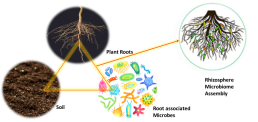
Root-associated microbiome: the microbial community
- Alston, J.M., Sambucci, O., 2019. Grapes in the World Economy, in: Cantu, D., Walker, M.A. (Eds.), The Grape Genome, Compendium of Plant Genomes. Springer International Publishing, Cham, pp. 1–24. https://doi.org/10.1007/978-3-030-18601-2_1
- Zufferey, V., Spring, J.-L., Verdenal, T., Dienes, A., Belcher, S., Lorenzini, F., Koestel, C., Rösti, J., Gindro, K., Spangenberg, J., Viret, O., 2017. The influence of water stress on plant hydraulics, gas exchange, berry composition and quality of Pinot Noir wines in Switzerland. OENO One 51. https://doi.org/10.20870/oeno-one.2017.51.1.1314
- Tombesi, S., Nardini, A., Frioni, T., Soccolini, M., Zadra, Claudia., Farinelli, D., Poni, S., Palliotti, A., 2015. Stomatal closure is induced by hydraulic signals and maintained by ABA in drought-stressed grapevine. Sci Rep5, 12449. https://doi.org/10.1038/srep12449
- Gambetta, G.A., Herrera, J.C., Dayer, S., Feng, Q., Hochberg, U., Castellarin, S.D., 2020b. The physiology of drought stress in grapevine: towards an integrative definition of drought tolerance. Journal of Experimental Botany 71, 4658–4676. https://doi.org/10.1093/jxb/eraa245
- Droulia, F., Charalampopoulos, I., 2022. A Review on the Observed Climate Change in Europe and Its Impacts on Viticulture. Atmosphere 13, 837. https://doi.org/10.3390/atmos13050837
- Zarraonaindia, I., Owens, S.M., Weisenhorn, P., West, K., Hampton-Marcell, J., Lax, S., Bokulich, N.A., Mills, D.A., Martin, G., Taghavi, S., Van Der Lelie, D., Gilbert, J.A., 2015. The Soil Microbiome Influences Grapevine-Associated Microbiota. mBio 6, e02527-14. https://doi.org/10.1128/mBio.02527-14
- Pacifico, D., Squartini, A., Crucitti, D., Barizza, E., Lo Schiavo, F., Muresu, R., Carimi, F., Zottini, M., 2019. The Role of the Endophytic Microbiome in the Grapevine Response to Environmental Triggers. Front. Plant Sci. 10, 1256. https://doi.org/10.3389/fpls.2019.01256
- Gontia-Mishra, I., Sapre, S., Deshmukh, R., Sikdar, S., Tiwari, S., 2020. Microbe-Mediated Drought Tolerance in Plants: Current Developments and Future Challenges, in: Yadav, A.N., Singh, J., Rastegari, A.A., Yadav, N. (Eds.), Plant Microbiomes for Sustainable Agriculture, Sustainable Development and Biodiversity. Springer International Publishing, Cham, pp. 351–379. https://doi.org/10.1007/978-3-030-38453-1_12
- Carreiras, J., Cruz-Silva, A., Fonseca, B., Carvalho, R.C., Cunha, J.P., Proença Pereira, J., Paiva-Silva, C., A. Santos, S., Janeiro Sequeira, R., Mateos-Naranjo, E., Rodríguez-Llorente, I.D., Pajuelo, E., Redondo-Gómez, S., Matos, A.R., Mesa-Marín, J., Figueiredo, A., Duarte, B., 2023. Improving Grapevine Heat Stress Resilience with Marine Plant Growth-Promoting Rhizobacteria Consortia. Microorganisms 11, 856. https://doi.org/10.3390/microorganisms11040856
- Moukarzel, R., Ridgway, H.J., Waller, L., Guerin-Laguette, A., Cripps-Guazzone, N., Jones, E.E., 2023. Soil Arbuscular Mycorrhizal Fungal Communities Differentially Affect Growth and Nutrient Uptake by Grapevine Rootstocks. Microb Ecol 86, 1035–1049. https://doi.org/10.1007/s00248-022-02160-z